
Newsletter Subscribe
Enter your email address below and subscribe to our newsletter

Enter your email address below and subscribe to our newsletter
Real Chinese, Real Kitchen
— Real Chinese, Real Kitchen —
I’m a 39-year-old mom of two, living in Yangzhou — a city in eastern China that most Westerners have never heard of, but that food lovers in China hold in quiet reverence. Yangzhou is the birthplace of Huaiyang cuisine (淮扬菜), one of China’s four great culinary traditions. The other three — Sichuan, Cantonese, and Shandong — get all the international attention. But ask any Chinese chef where the country’s most refined home cooking comes from, and many will point here.
I cook every single day. Twice. Sometimes three times. My daughter is 11, my son is 8, and feeding them — really feeding them, not just filling them up — is the project of my life.
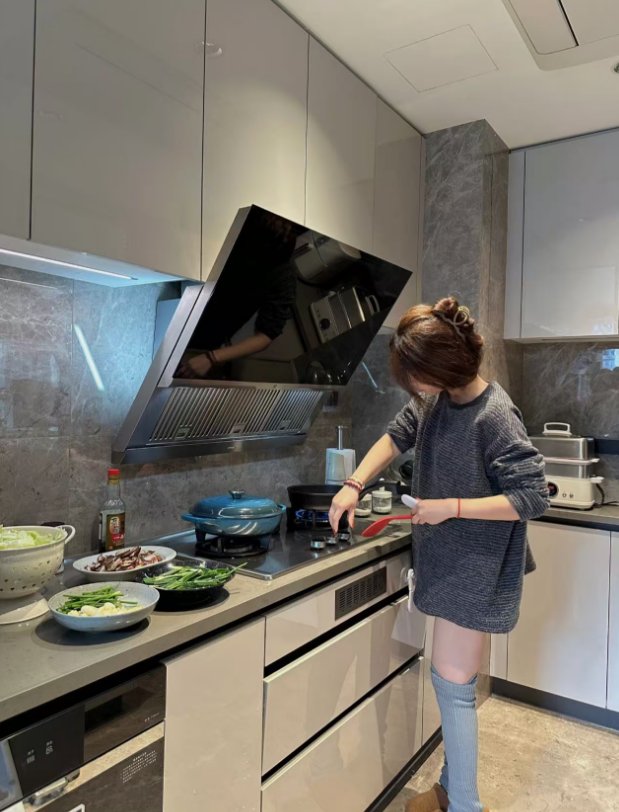
I’ve been cooking for over twenty years. Started in my mother’s kitchen when I was a teenager, learning by standing next to her, watching the way she’d test oil temperature by dropping a single grain of rice into the pan, the way she’d salt a fish before steaming, the way she’d never measure anything but always get it right.
When I became a full-time mom nine years ago, the kitchen became my workshop. Three meals a day for a family of four, year after year, in a city where the wet market sells things most Western readers have never seen — live river fish at sunrise, paper-thin tofu skin pulled fresh that morning, bamboo shoots that were underground yesterday.
Almost every English-language Chinese food blog is written by someone who left China decades ago, or by someone who never lived here at all. I’m cooking with what’s in front of me, today.
I started this blog because I noticed something. Other bloggers do beautiful work, but they’re cooking with American supermarkets and childhood memories. They’re translating a China that exists in the past, or in their imagination.
I’m cooking with what’s in front of me, today. The vegetables in season this week. The way my mother-in-law actually braises pork. The dishes my kids ask for after school. The food we really eat — not the version that gets put on restaurant menus abroad.
Most “authentic” Chinese food blogs end up either:
I try to walk the line between them.
Every recipe here is cooked in my Yangzhou kitchen first — with the real ingredients, the real techniques, the way it’s actually done. Then I rewrite it for you. For every hard-to-find ingredient, I tell you exactly what to buy on Amazon, or what to substitute (and how close it’ll get you). For every technique that requires a 30,000-BTU restaurant burner, I show you how to fake it on a regular home stove.
I won’t pretend a substitute is “just as good” when it isn’t. I’ll tell you the truth. If a dish genuinely needs Pixian doubanjiang, I’ll say so, and I’ll point you to where to buy real Pixian doubanjiang. But I’ll also give you a backup plan, because life happens.
Because I live in its birthplace, you’ll see a lot of Huaiyang dishes on this site that don’t get much English-language coverage anywhere else. Lion’s head meatballs, the real way. Yangzhou fried rice — the actual Yangzhou kind, not the American takeout version. Wensi tofu, where the tofu is cut into 5,000 hair-thin threads with a single knife. The braised pork that takes six hours but tastes like nothing else on earth.
Huaiyang cooking values precision, subtlety, and respect for the ingredient. It’s the opposite of the fiery, bold cooking most Westerners associate with Chinese food. It’s what Chinese emperors ate. It’s what my family eats on Sunday afternoons. And I’d love to share it with you.
But don’t worry — I cook everything. Sichuan mapo tofu and Cantonese steamed fish and Northern dumplings are all in heavy rotation in my kitchen too. I grew up loving all of it, and so will you.
If you’re new here, I recommend starting with my Start Here page — it walks you through the 10 essentials of Chinese cooking and the 15 pantry items you’ll want to have. From there, browse by ingredient, by cuisine, or by technique.
If you want to follow along, I’m most active on Pinterest (where I share every new recipe) and Instagram (where I share what I’m cooking that day in real time).
And if you make something from the site, please come back and leave a rating or a comment. I read every single one. It’s the best part of doing this.
Thanks for being here.
— Zhangling
Yangzhou, China